
In Morocco, an outfit rarely starts with a garment. It starts with a hand — and in 2026, the rest of the world is finally catching up.
In Morocco, an outfit rarely starts with a garment. It starts with a hand. A hand cutting cotton by feel, threading a needle for the thousandth time this month, or drawing the pattern for a lace panel that will take a full day to finish. There is no fast fashion in a country where the caftan has been handmade for over a thousand years — and in 2026, the rest of the world is finally catching up.
"Craft" has quietly become the most-used word in luxury fashion this year. Brands are positioning themselves as guardians of artisanal technique. Consumers — around seven in ten of them, according to global handmade-market research — say they will now pay more for something that has been made by human hands. And the North African aesthetic, once neatly filed under "holiday wardrobe," is becoming something more permanent: a template for how a summer garment should feel to wear.
This is a small guide to why that's happening, what it means for what you actually put on this July, and where — inside our own world — you can find pieces that carry the story with them.
A craft older than fashion itself
The caftan, in one form or another, has been worn in Morocco for over a thousand years. Originally the dress of Berber and Andalusian nobility, it moved through the courts of Fez, into the medinas of Marrakech, and eventually onto the shoulders of every generation of Moroccan woman who inherited it — and, quietly, the skills to make it.
What we call Moroccan fashion today is really the visible top of a much deeper cultural iceberg. Underneath sit centuries of embroidery traditions — each region has its own stitch — natural dyeing, hand-weaving, and passementerie: the tiny buttons and twisted-silk edging that have no shortcut and never will. A single wedding kaftan, made properly, can still take an artisan six months.
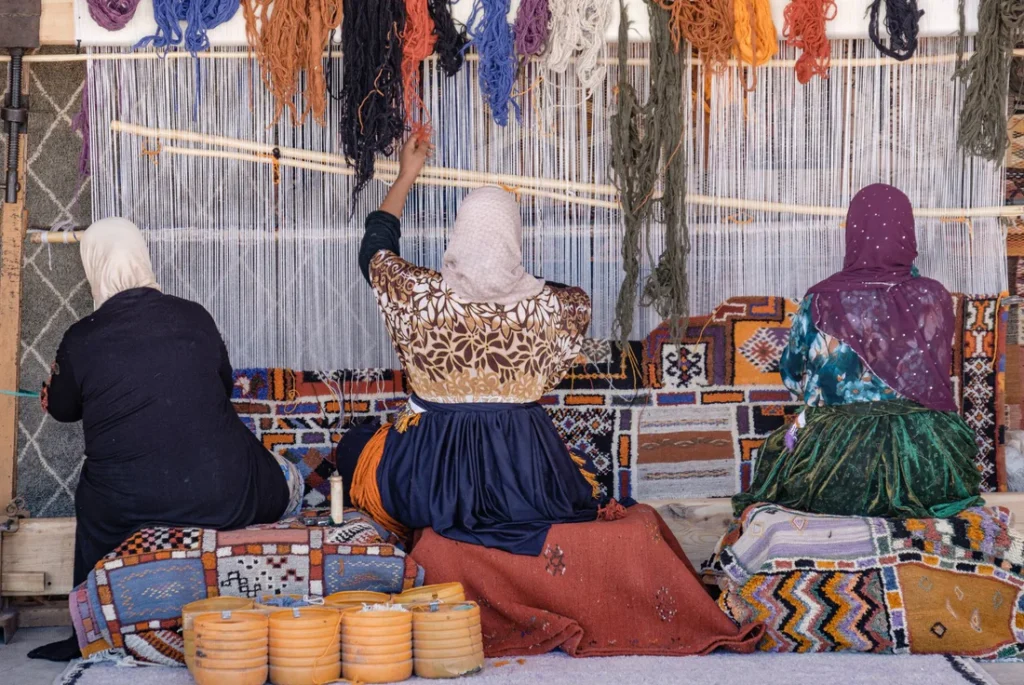
That's the crucial thing to understand about a Moroccan piece: you are not really buying a garment. You are borrowing a fragment of a very long conversation between generations. It's why the pieces feel different when you put them on. They were never designed to be disposable.

Handwork you can feel
Machine-made clothing has one great virtue: consistency. Every seam matches every other seam, every stitch is exactly the length of the one before it. Handmade clothing has the opposite virtue: it is quietly imperfect, and it holds the fingerprint of the person who made it.
Look closely at a hand-embroidered Moroccan hem and you can see it. The stitches are almost identical, but not quite. The lace panel drapes the way it drapes because a particular pair of hands worked out how it should sit. The linen has been washed to a softness no factory has learned to fake.
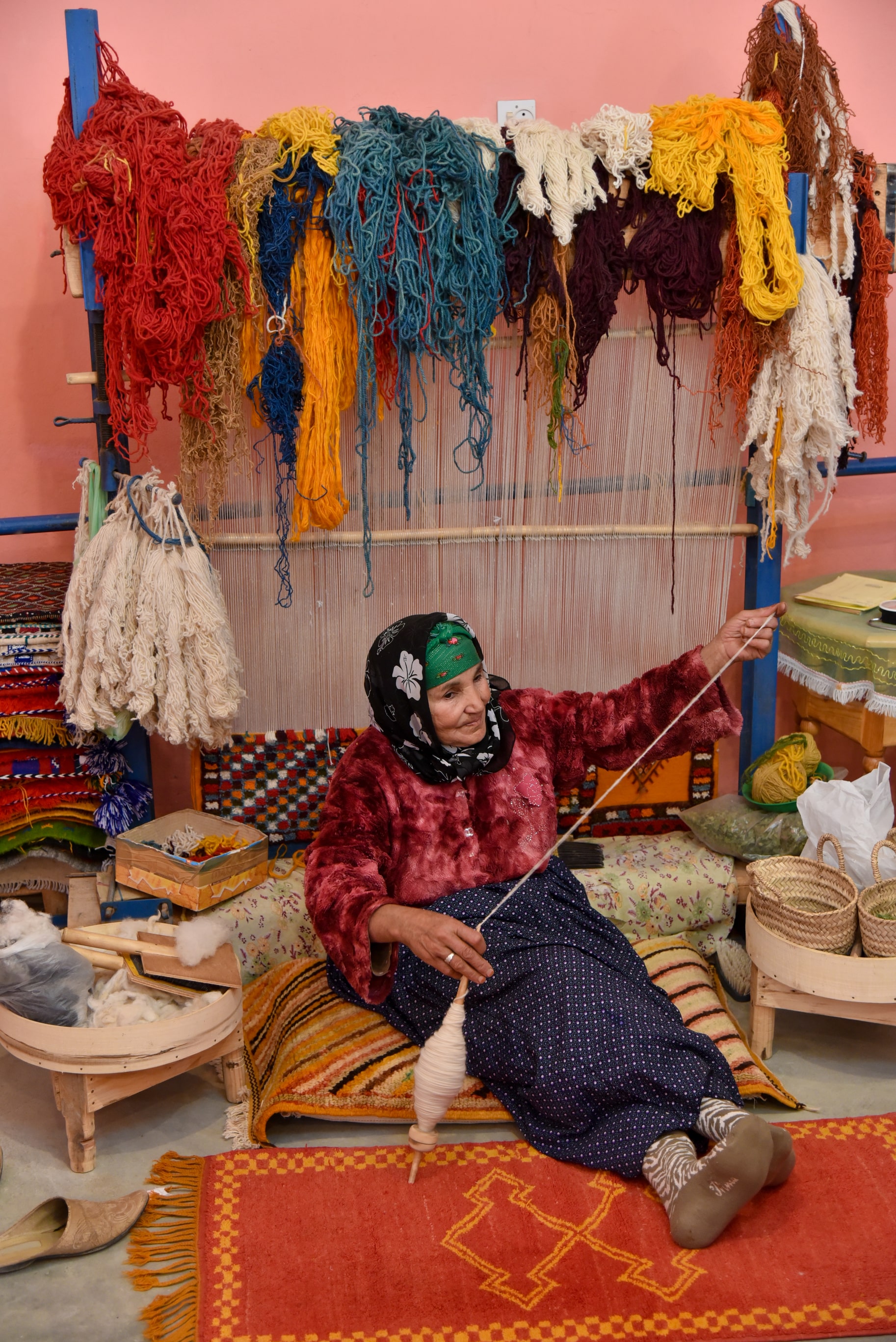
This is what "artisanal craft" — the biggest buzzword in fashion this year — actually means when you get past the marketing copy. It means a piece of clothing carrying evidence that a person was there. In a summer where minimalism is quietly giving way to a hunger for character, that evidence is what people are queuing up for.

Made for the heat, by people who know it
Here's the second reason Moroccan craft feels like a revelation in July: it was designed by, and for, people who live in real heat. Every choice in a traditional Moroccan wardrobe is a solution to a summer problem.
Cotton and linen, in weights fine enough to breathe but structured enough to drape. Loose, forgiving cuts that skim rather than cling. Lace panels that let the air in without letting the sun through. Cover-ups that layer over swimwear at midday and over a slip dress at dusk. Trousers cut wide enough to move — enough weight to hold shape, enough looseness to catch a breeze.
Compare that to most European "summer" clothing — polyester holiday dresses, fashion-week silhouettes designed for air-conditioned photo shoots — and it becomes obvious why so many holiday wardrobes end up half-worn. Moroccan pieces are dressed for the weather. They earn their space in the suitcase.

Meet the three Moroccan designers in our world
All of this is why we chose to work with three of Morocco's most quietly celebrated emerging designers — three names that are already well known at home and, we think, ready to be known further afield.
Owl Marrakech brings the soul of North African craft into the contemporary wardrobe. Their summer edit — cover-ups in lace and floral cotton, brown and cream kimonos, striped resort trousers — is the definition of a suitcase piece. Start with the Moroccan Brown Kimono (£100) or the White Lace Summer Cover Up (£150).
Hanout Boutique is a love letter to handmade fashion in the older Moroccan tradition — colour, texture, warmth, embellishment. Their Orange Groovy Silk Pants (£275) and hand-embroidered Wool Embroidered Coat (£520) are perfect examples of pieces designed to live in a wardrobe for years, rather than a season.
Laure Welfling works on the evening side of the Moroccan story — vibrant, precise, deeply considered. Start with the Triangular Sequin Blazer (£650), the show-stopping Pink Zebra Print Biker Jacket (£750), or the Black Sequins Embroidered Coat (£650). Not strictly summer daywear, but exactly what you want for the warm-night dinners that summer wardrobes so often forget about.

Owl Marrakech, Hanout Boutique and Laure Welfling are established, respected names inside Morocco. When we call them emerging, we mean their visibility outside their home country — not their standing, their skill or their maturity as designers. Our job here is really quite simple: to make sure that people who love their work can find it, wherever they happen to live.
How to wear it, this July
Three ways we'd style a piece this month, if you're building around one.
At the beach or by the pool. A lace cover-up over swimwear, striped Moroccan shorts, a simple wide-brim hat. The point is contrast: something delicately made against something functional. It elevates the whole moment.
City-summer, off duty. A brown kimono over a plain slip or T-shirt and jeans. Instant transformation of a five-minute outfit — and it works for a lunch, a gallery, a coffee that turns into an afternoon walk. Layer up when the air-con hits.
Warm-night dinners. The evening pieces come out. A sequin blazer over a linen dress, or hand-embroidered silk trousers with a plain top and something gold. You will be overdressed, in the best possible way.
The overarching rule: let the handmade piece carry the outfit. Anything else you wear with it can be quiet. That's the beauty of a garment that has this much story built in — it doesn't need help.
With love, Alexandra
Global handmade crafts market data via 2026 industry reports (20F7, World Cultural Threads). Moroccan caftan and North African craft heritage via cultural-heritage histories and traditional Moroccan textile research. Craft-revival consumer trend data (2026) via Mestizo Journal and Bazaar Morocco reporting on 2025–2026 Moroccan craftsmanship. Editorial imagery: Moroccan Wealths, Albion Gould (via Dreamstime). This article reflects published research and heritage sources as of July 2026.
0 comments